The Brigit and Magdalene Flame in Chilbolton. St Mary the Lesser.

This was very simple sharing of the Magdalene Flame. After the last anchoring in Bullington church, I wasn’t feeling any great urge to do any more, yet a little energy still seemed to remain. I wasn’t sure what this residual energy was but I decided to follow the ‘sign-post’ anyway and headed to the beautiful village of Wherwell, which I thought might be the next destination. However, while I was driving, with only an hour in which to visit, just as I was passing the turn-off for Chilbolton, I followed the impulse to take that instead.
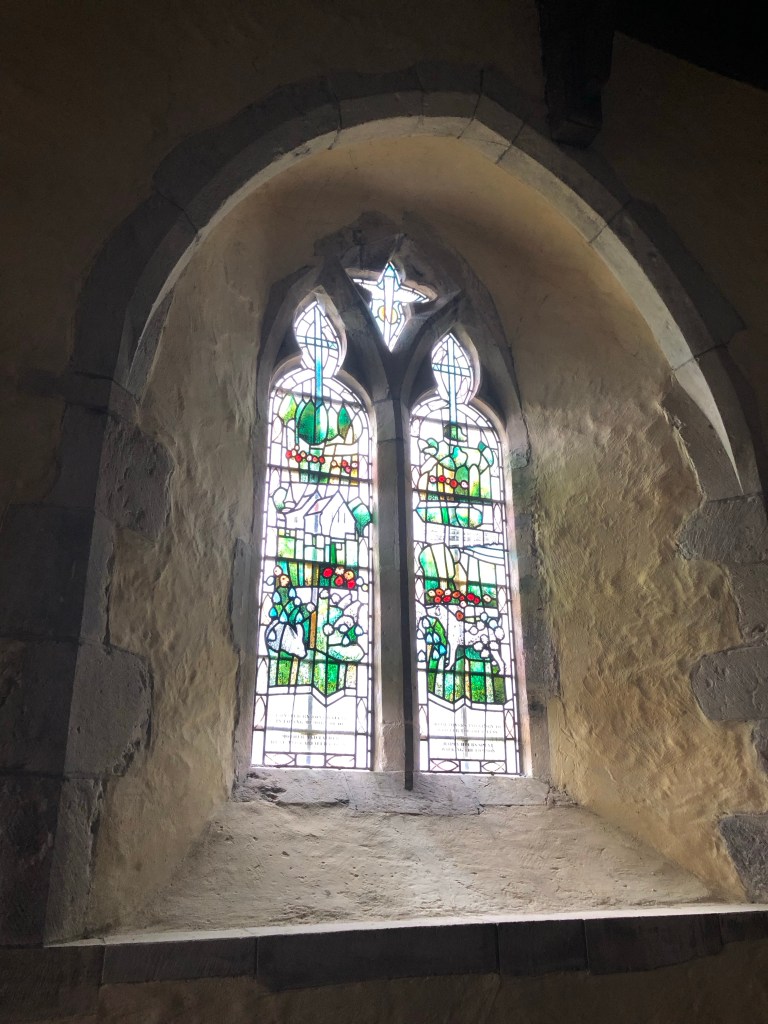
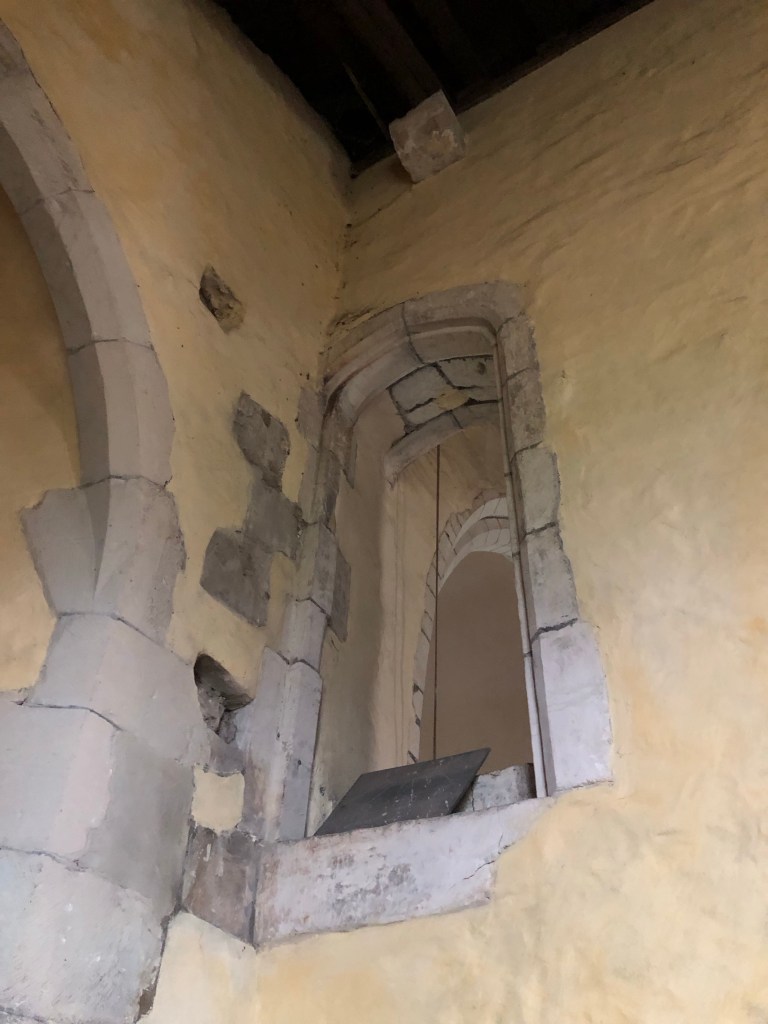
Chilbolton is another church on the circuit and the other churches were actually part of old Chilbolton Manor, as I discovered while researching St. Catherine’s in Littleton. I don’t like doing this research before doing the work as I don’t want my mental information to interfere with my intuitive hunches, although, many times, I am unaware of the church’s role in the circuit until I work with it. Once I’ve done the work, then I can do the research. This is also useful because it can confirm the information you have picked up with y our intuition.

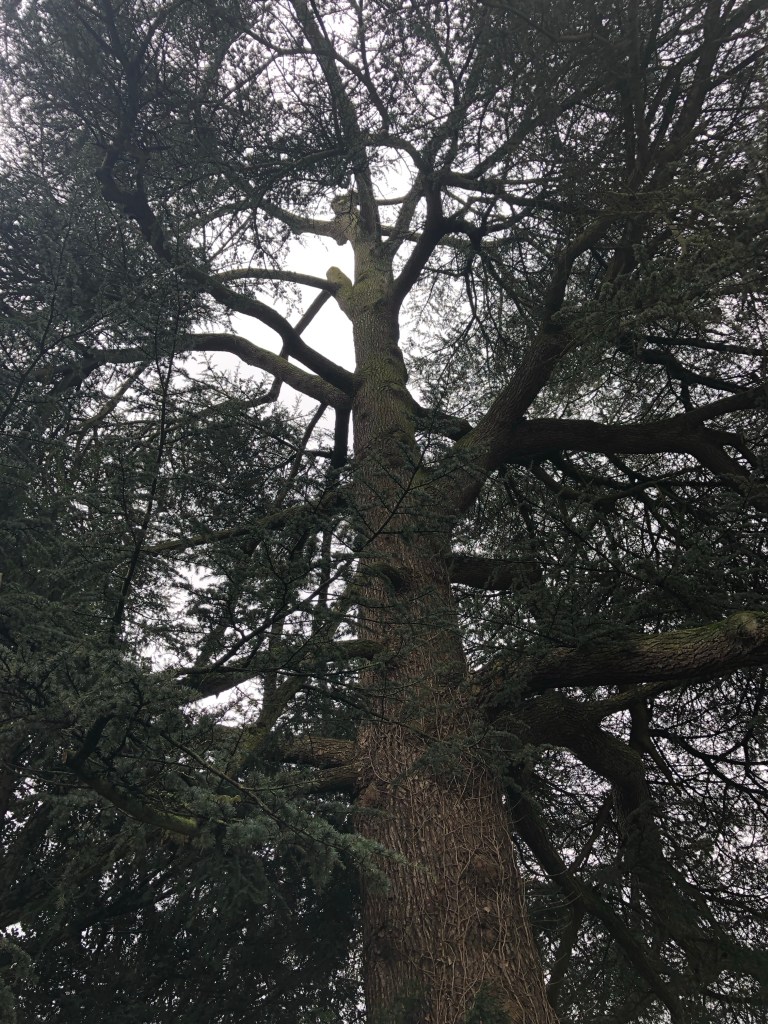
It was only when I got to the village that I recognised it. I had been here before and had made a connection with a beautiful old Pine tree outside the main entrance. Actually, it was the tree I recognised, and as soon as I saw it I knew I had been there before. On my first visit, over twenty years ago, I was greeted by this old tree, and its energy spread out all around the area. Its job was as guardian, holding the energy for the area. Today, however, it was quiet, but I said hello anyway.

I had originally been introduced to this place by a friend called Lisa, who used to be the minister here. When I knew her, I was working in the Speaking Tree Bookshop in Winchester and she was a regular visitor. She was a very interesting lady who was trying to come to terms with intuitive knowledge while working as a Christian minister. She also had a wonderful connection to a Greek Goddess. Together we visited a number of prehistoric sacred places around Andover and received interesting information about the Anna Valley. (I’ll root it out and post it for anyone who might be interested).

I wandered inside the church, wondering if Lisa was still a minister there, and tried to connect to the energies. Finally, standing in front of the altar, I found myself channelling a prayer. I am not a pray-er, so when this happens, I am often immediately uncomfortable, but, reframing it, a prayer is a petition, so I put my judgement aside and said the words that came into my head.

“O holy Mother, I ask permission to install your flame so that all who visit and worship here can partake of your living, abundant energy. Let no person leave without you in their heart and may all who come here benefit from your wisdom and love. Let also those who receive it pass it on to those who need it. Amen.”

After this, I saw myself placing an already lit, large magenta candle on the altar. Although the candle was Magenta, the flame was orange; a combination of the Magdalene and Brigit energies. The light of the flame expanded filling the space with warmth and light. Next, just as at Crawley and Bullington, the May Queen’s Hawthorn flower wreath was placed around the candle’s base thereby anchoring the May energies too.

This was a short and simple anchoring of a portion of the Magdalene Flame and the feminine Spring mysteries.
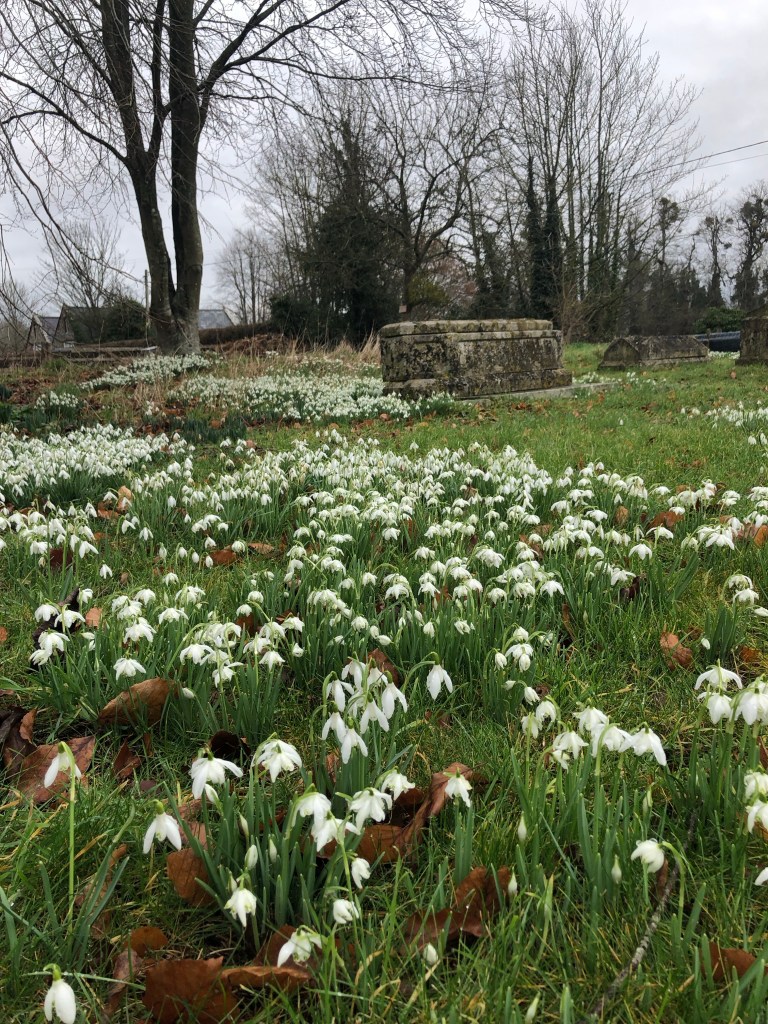
Sometimes, the anchorings are this simple, especially if they come on the heel of longer workings. There must be some significance that, aside from the original Church of St. Edward the Confessor anchoring, all the others are part of the same network. Chilbolton was originally granted by King Athelstan to the church of Winchester and until church properties were taken by Henry VIII, the manor of Chilbolton remained in Church hands. Edward the confessor was the last Saxon king and was crowned at Winchester cathedral in April 1043. That makes me wonder if the anchoring of the Magdalene Flame has something to do with that time layer, when many small Saxon churches were founded.

The early Saxons were pagans but converted to Christianity under the influence of Irish missionaries (wouldn’t you know!). BUT, Irish Christianity was a different Christianity to the more dogmatic Roman version. On the Aran islands, back in 2006/7, my friend and I discovered a very beautiful Christianity, more nature-based than dogmatic, so this, I imagine, is why the pagan Saxons were able to accept Christianity in the first place. It was a beautiful movement which honoured both Mother and Father. Although it probably wasn’t as idyllic as I’m painting it. Saxon bishops were probably proclaiming their Saxon Christian power in the same way as other people have usurped the purity of spiritual energy and beliefs, using God as their weapon.

Looking at the history of Saxon churches and Edward the Confessor, it appears that he wanted to change the English church, with its hundreds of saints and continuing beliefs in Elves and Goblins, to a more European version, which was very Roman. Most of the churches in the Manor of Chilbolton were originally founded by the Saxons and might have been built on earlier sacred sites. But I might be looking for connections that don’t actually exist. Yet, when I think about working in a network of churches like I have been doing, there is a reason why those places are important, especially when they are historically connected. The Henry du Blois connection, at Littleton, was important, because he was more than simply a historic character. He was a very spiritual man who was devoted to the Divine Feminine consciousness and built his own network of churches with the intention of anchoring the balance between the male and female, although it would have been couched in terms more acceptable to the religious public.
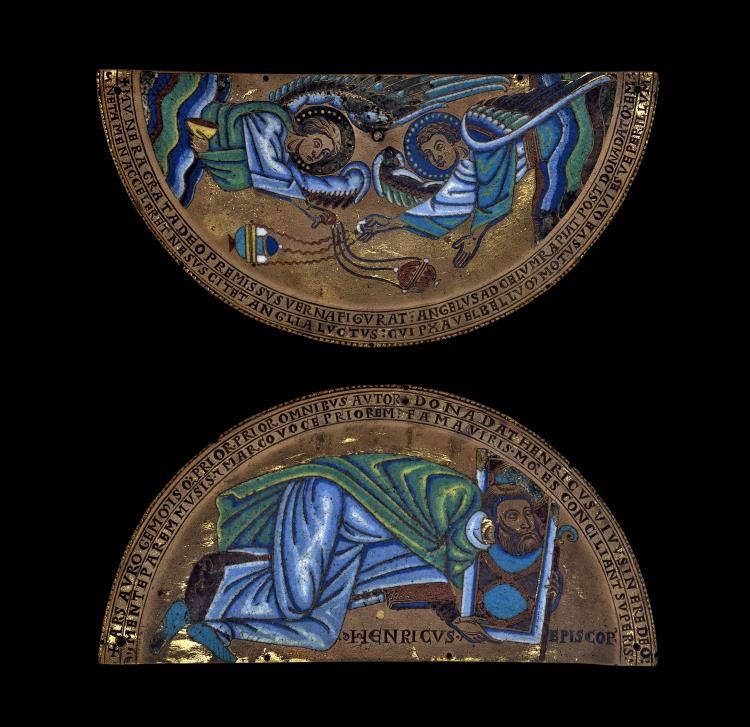
Henry Du Blois

But, there is also the Soul development aspect which plays a part. Humanity goes through cycles of beliefs, just as individuals do, and there are times when those beliefs need to be tweaked. Spiritual ideas are anchored at those points which the Guides of Humanity hope will take root. They don’t always, or if they do, the more emotional human desires get in the way and those new ideas are either rooted out or suppressed. No one knows how thoughtforms will be received, Humans have free-will and therefore make their own choices. I had an experience of this myself.

Twenty-three years ago, when I was working in the Speaking Tree bookshop, a man began coming in. He claimed to be a healer and told me he wanted to train as a Reiki practitioner. However, his idea of Reiki was to become a Reiki Master over a weekend and make lots of money. He was also someone who took advantage of women, using them for his own ends and fancied himself another David Icke. He had a choice as to how to use his ability to channel healing energies but he had free-will and therefore could act as he pleased. There will always be people who put power and money over Love, but the hope is that if enough people choose Love, they just might create something different, even if only in small, quiet communities. And who knows? Maybe Reiki helped that man heal his power issues, or maybe he was a Dark Knight, there to help people find their own power – the hard way.

In our little community of Chilbolton Manor Churches, the hope is that the energies will affect people with open minds and help bring a note of balance to the world.

Destiny is all… as Uhtred would say.
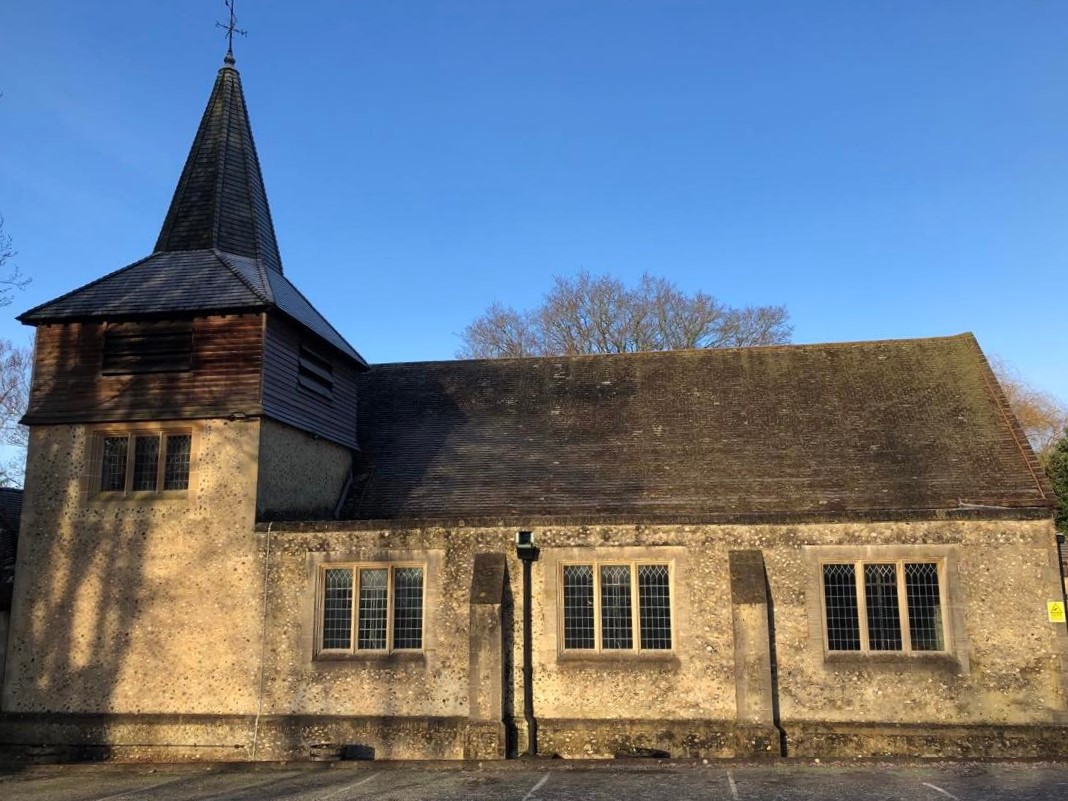
The Brigit and Magdalene Flame. Spring 2023. Part One. RC Church of St Edward the Confessor.

31st January 2023

I’ve been working with small churches for the past two weeks, connecting them with the Spring Brigit flame and the Magdalene flame energy.

Catholic Church of St Edward the Confessor.

The first work was in the Church of St. Edward the Confessor, a small Catholic place near what used to be Otterbourne Manor (the place still exists but is diminished in size). I had been driving one of my daughters to work in Chandler’s Ford for a couple of weeks and had passed the church on my way there. On my first drive, I noticed a Brigit flame in the building and wondered about it, but did nothing. I thought it meant there was already one there. Later, driving to my father’s, via Sparsholt, I passed the little church of St Stephen and saw a magenta flame there. Again, I thought it meant there was already one there, so I ignored it, wondering instead who might have planted it.

On the way back from another Chandler’s Ford journey, a full bladder forced me to stop in the church of St. Edward the Confessor to wait until the traffic subsided and to find a toilet. Inside, the church is quite modern, having been built in the early twentieth century. As I approached the table altar, behind which is a striking stained-glass window, I saw, with my inner eye, hands place a large, wide shallow bowl on the altar. It reminded me of the fire bowls they use outside in Egypt, to keep warm in winter. In the bowl was a small orange flame and I had the impulse to blow energy which ignited it so that it rose to the ceiling.

Stained Glass Window.

I next saw the Was-sceptre symbol anchor the flame into the lava layer below the earth’s crust. The upper part of the symbol went into the sky and there was a date palm behind the altar to which it connected. In the ancient Middle East, the Date palm was seen as the tree of the Goddess, the dates her fruit, the only food in an otherwise arid desert. I have worked with palm trees while living in Egypt and anchored many energetic palm trees, especially where people live at subsistence level. The feeling then was that the people would always be fed from the fruits of the Goddess. They would not starve but would have what they needed. (The palm tree, in ancient Assyrian religion represented the connection between heaven and earth and was sacred to the Goddess Ishtar. The Goddess, in her many guises, is often depicted as residing in a tree, giving her ‘fruits’ freely).

The Palm means Life. Pure and simple. Especially in dry times.

While I was in Luxor, I read a theory that the Was-sceptre represented a giraffe. The bottom of the symbol represents the cloven hoofs of the giraffe, which are quite dainty, while the hook at the top, represents the head. The ‘foot’ of the sceptre touched the earth, while the ‘head’ could reach up to the heights and get the fruits from the tall palms. It was a medium between the food of the Goddess and earth. The symbol, in mythology, is associated with the god Set, who is the god of the hot, dry desert, an arid place where there are few resources. It is a staff of power, wielded by the priests. It symbolises the power to bring the Food of Heaven to earth and only those who could act as mediums between divinity and humanity could use it.

Other theories abound around the meaning of the symbol, of course, but in the course of my work, the Was-sceptre is always used to anchor flames deep beneath the earth’s mantle, and to anchor the flame to a higher level of the earth’s energy field. The sceptre itself is a strong ‘holding’, a rod of power, a connector. It keeps the energies stable, and in place, because the flame is an active energy.

So why was an Irish Goddess flame of Brigit being anchored by the use of Egyptian symbols in a small Catholic church in Chandler’s Ford? As I tuned in, I tried to sense what it might mean. What came back was something about the origins of Christianity being from the Middle East. Jesus was born there, after all. There was something about reconnecting the energies of this church to its origins, reconnecting it to its roots in Jerusalem. There was something about the original, unsullied beliefs around the goddess being brought back to common consciousness. That the Divine Feminine was once an equal partner to the Divine Masculine, each one valued for its gifts.

This was a small community church, albeit well used, and the hub of the Catholic community, yet it was the start of a series of connections between other, smaller, churches, all of Saxon origin and mainly Church of England. I was raised a Catholic, and attended a convent until I was ten years old, going to mass every Sunday, which I hated. But out of choice, I also went to the evening devotions. This I loved. There was a sense of ancientness here, between the incense filling the church and the hymns reminding me of ‘Faith of our fathers’, my favourite hymn. All those dungeons, fires and swords! back then, I felt very connected to an energy that seemed far removed from the God we were being taught about in school and at Sunday mass.

When we relocated from the country to Dublin, I was educated in a private, protestant school and lost that religious connection but I loved the school, nonetheless. It was child-centred, as opposed to God-centred. Now, between the two educations, I had a fairly good idea of the difference between them and how it made me feel.

Years later, living in the UK and at an Initiation workshop in Glastonbury, myself and another attendee decided that, rather than go to the Goddess rituals that everyone else was attending, we would go to the local Catholic church where they were having a healing service. This was a new experience for me and a reminder of an older one. As I watched the Catholic ritual of communion and wine, in my eyes, the priests were enacting an ancient Egyptian ritual. The roots of these rituals came from the temples of Egypt. The woman who had come with me had seen the same thing, which was amazing to me. Even more interesting was that I could see the effect that the ritual was having on the wine, but also saw that it had no effect on the bread. And yet, at that time, only the priest drank the wine. Now, of course, it is different and everyone gets both. However, the bread is still nothing but bread, but the wine is charged with energy.

But that experiment taught me that the Catholic ritual was a very ancient, energetic process, with a deeper connection to a ‘Mother’. Yet it was the Spring Flame of Brigit being anchored here, in Chandler’s Ford, Brigit herself being a Goddess who became a Catholic saint. She wasn’t destroyed by the religion but rather incorporated into it. She is also a goddess of light and fertility, the returning sun after a dark winter.

I thought I was finished here, so went to look for a loo. When I came back, I was ‘instructed’ to do more so I stood in front of the altar again. This time, a magenta channel of the Magdalene descended with a small magenta flame inside. It reached to the floor and high into the sky, a veritable pillar of fire. Again, I felt the impulse to blow and when I did the magenta flame expanded until it filled the channel. I was given a portion of this flame to transport somewhere else. I already guessed that it was for St Stephen’s church in Sparsholt.

On my way out, I found the holy water font and blessed myself with it. On impulse, before I left my house that morning, I had applied holy water I had gotten from Arundel cathedral last year. This is another ritual that we have forgotten the original purpose of: the application of holy water in an equal-armed cross as you enter a sacred space. This entering ritual was to open the energy-field for the ensuing ceremony. The energies generated by the Mass fed you, energetically. After the ritual Mass, on leaving the building, you then applied holy water again, this time to seal the energy-field so that all the energies you absorbed would be retained, much like sealing the energy-field with the raku symbol after passing a Reiki attunement. Originally, the Mass was an attunement, but not in the way we pass attunements today. In the original Usui Reiki system, Mikao Usui ‘attuned’ his students every time they met. He shared the energy with them by sharing his own Reiki-field. They sat in that energy for the duration of the meeting, their fields open and receptive. In the original Catholic Mass, this was the way it was done too. The energy of the ritual was shared and absorbed. It was a ‘communion’, a sharing; an attunement. However, after the Synod of Whitby, that all began to change, Celtic Christianity, with all its blend of Christian and Celtic beliefs, was replaced by Roman rites and rituals… and control.

Having written this, but not yet posted it, I was with my father when the local village magazine came. Inside was a list of ceremonies for Lent, one being an ‘Ashing Communion’. This is where they put ash on your forehead, again in an equal-armed cross. (That cross signifies equilibrium). I wondered what the ash meant. The palm used in Palm Sunday is burnt and applied to the forehead. In Roman times, penitents wore ashes and sackcloth to repent for their sins. Now, everyone is a sinner, by all accounts. BUT it was the palm, and again, we come back to the pagan origins of Christianity, which feel far more real to me. The palm, sacred to the Goddess, is still being used in Christian religions, which has to be a good thing.

I’ve put the link at the bottom of this page so if you want to visit the church and partake of the energies there, feel free.

https://en.wikipedia.org/wiki/Faith_of_Our_Fathers_(hymn)

https://www.bbc.co.uk/religion/religions/christianity/saints/edward.shtml

https://www.stswithunwellsparish.org.uk/sted

https://en.wikipedia.org/wiki/Synod_of_Whitby